The short answer is: probably not in the way you're thinking. True hair loss, the kind that involves thinning at the follicle, is most commonly connected to factors like genetics, hormonal changes, or underlying health conditions. A hat sitting on your head isn't going to interrupt what's happening at the root level. What people are usually noticing when they associate hat wear with hair loss is actually breakage. And those are two very different things.
Breakage happens along the hair strand, not at the root. When hair is repeatedly exposed to friction, pressure, or dryness, the outer layer of the strand weakens over time. Strands become more prone to snapping, particularly at the points where a hat makes consistent contact. The result can look like thinning or reduced volume, but the follicle is fine.
Knowing that distinction matters because it changes the solution. If breakage is what's happening, the fix isn't giving up hats. It's choosing hats with the right materials.
What Contributes To Hat Hair Loss And How To Reduce It
Breakage from hats tends to be gradual and cumulative. No single wear does dramatic damage. It's the repeated contact over time that wears down the hair's outer layer and leaves it increasingly fragile. A few things accelerate that process more than others.
Material is the biggest factor. Coarse hat interiors create consistent friction against the hair shaft, particularly at the points that touch most throughout the day. Over time, this weakens the strand and increases the chance of snapping. Fit matters too. A hat that sits too tightly exerts ongoing pressure on the same areas of the hair, adding a different kind of mechanical stress, especially around the hairline and temples.
Switching to a smoother interior lining is one of the most straightforward ways to reduce that cumulative stress. Silk creates significantly less resistance than most traditional materials, allowing hair to move rather than catch. For women who wear hats regularly and have noticed consistent breakage, frizz, or dryness, the lining is usually the first thing worth changing.
How Silk Lining Changes The Experience
Silk is significantly smoother than the materials used in most hat interiors. That smoothness is of the utmost importance because it reduces the resistance that hair encounters when it comes into contact with the lining. Instead of catching or dragging against the fabric, hair can move across it with minimal disruption to the strand's outer layer.
Silk also has moisture-retaining properties that most traditional hat materials lack. Hair that retains moisture tends to be more flexible and less prone to snapping. For women with naturally drier hair textures, namely curly, coily, and highly textured hair types in particular, this makes a meaningful difference.
At Damazo, we use a 22-momme, 100% mulberry silk lining in our silk-lined hats. The mulberry silk provides a smooth, friction-reducing surface that benefits hair. The result is a hat interior that works with your hair rather than against it, limiting friction at the contact points that matter most, and supporting hair hydration rather than stripping it.
Damazo Hats Designed To Protect Your Hair
At Damazo, every hat is built around the same core principle. Your hair shouldn't have to suffer for you to wear a hat you love. Our lineup covers a range of styles designed for various settings and hair needs, all with the same hair-first interior construction. Here are four worth knowing about.
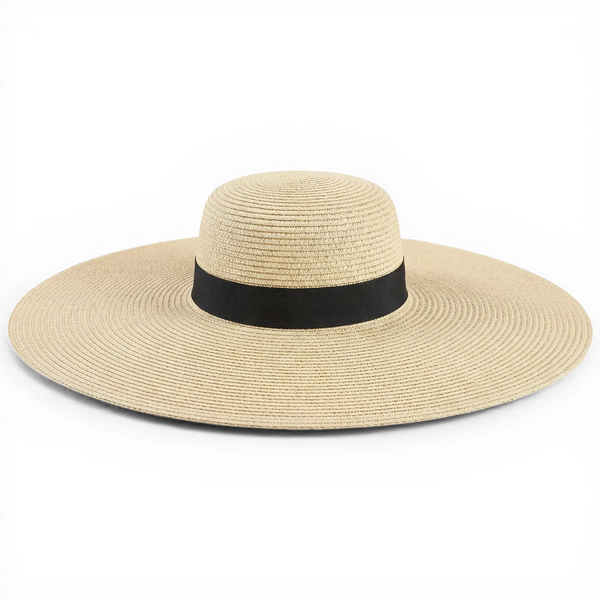
The Soleil Classic: A Timeless Sun Hat For Everyday Wear
The Soleil Classic is one of our most iconic sun hats, featuring a signature wide brim that provides real coverage without compromising your hair. A fully silk-lined crown interior works to minimize friction throughout the day, while a deep 5 in (12.7 cm) crown height gives curls, waves, and voluminous styles the room they need to sit without compression. The 19.5 in (49.5 cm) wide brim provides generous sun coverage, and the packable design makes it easy to bring on travel without losing its shape. Available in beige, tan, and black in sizes M and L.
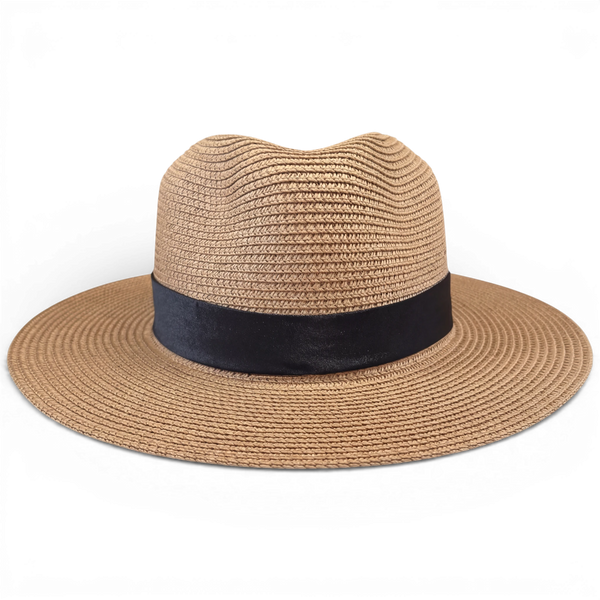
The Soteria Classic: A Silk-Lined Fedora That Goes Easy On Your Hair
Most fedoras look polished but do real damage to textured or voluminous hair by flattening curls, drying out the hair shaft, and creating frizz wherever the interior comes into contact. The Soteria Classic solves that. Its fully black silk-lined crown reduces friction at every contact point, while the 6 in (15.2 cm) crown height accommodates natural volume without crushing it. The lightweight straw construction stays structured without feeling overly stiff, making it easy to wear from everyday outings to more elevated occasions. Available in tan, beige, and black in sizes M and L.
The Eos Visor: Silk-Lined Protection For Your Edges
For women whose primary concern is protecting their hairline and edges, the Eos offers something most hats can't: open-top coverage that completely eliminates crown pressure. The silk-lined band sits along the hairline, exactly where traditional visors tend to cause snagging, pulling, and edge breakage, and helps lessen that contact stress with every wear. Because there's no crown, buns, ponytails, and braids sit freely without any pressure. A comfort-stretch band and adjustable back ties make it easy to fine-tune tension for a secure fit on most head sizes (approx. 55–63 cm). Available in beige, tan, and black in one adjustable size.
The Eclipse: An Open-Top Sun Hat For Protective Styles And Updos
The Eclipse takes the open-top concept further with a full, wide-brim silhouette that gives you sun coverage without the hat hair that typically comes with it. The open crown keeps updos, buns, braids, locs, and twist-outs completely free with no crown pressure or awkward reshaping when you take it off. Silk-lined contact points along the band help protect your edges and hairline throughout the day, while an adjustable fit and ties keep it secure even on windy days. Available in black, beige, and tan in one adjustable size.
Is Wearing A Hat Bad For Your Hair?
Inherently, hats aren’t bad for your locks, but you can do your hair a kindness by seeking out volume-friendly designs. To be specific, the interior of a hat is where most of the damage happens. Rough or coarse fabrics create resistance against the hair shaft every time you move, put the hat on, or take it off. That friction disrupts the outer layer of the hair, leaving it more susceptible to dryness, frizz, and eventually breakage. For women with curly, coily, wavy, or textured hair, whose hair structure is already more prone to moisture loss, that friction compounds quickly.
Fit and breathability are worth considering, too. For instance, hats that sit too snug can put consistent pressure on the same areas, which adds another form of stress on the hair and, in some cases, the hairline. Meanwhile, a hat that traps heat without any airflow can create an uncomfortable environment for the scalp. This doesn't directly cause hair loss, but it can affect how your scalp feels throughout the day.
The takeaway isn't that hats are bad for your hair. It's that not all hats treat your hair the same way, and if you've noticed consistent frizz or breakage after wearing hats regularly, the interior material is likely worth looking at.
Does Wearing A Hat Thin Your Hair Over Time?
When hair experiences repeated breakage at similar points along the strand, particularly around the crown, temples, or hairline, the overall result is uneven length and reduced volume. So, it may create the appearance of thinning, even when the follicles themselves are completely healthy and active. Frizz amplifies this further, making hair look less dense than it actually is. It's a visual effect driven by cumulative damage rather than a change at the root.
For this reason, the conversation around whether wearing a hat thins your hair is often more about strand health than follicle health. The strands are where the impact is felt. Consistently protecting them with the right materials is often what keeps hair looking and feeling fuller over time.
Does Wearing A Hat Affect Hair Growth?
Hair growth happens beneath the scalp, driven by processes at the follicle level. The presence of a hat on your head doesn't interrupt that process. So in that sense, no, wearing a hat does not affect hair growth.
What can be affected is the hair you already have growing. Breakage reduces visible length and thickness. If hair is consistently breaking at a rate that outpaces growth, hair can appear to stall or thin even when the follicles are producing normally. Protecting the strand through friction reduction, moisture retention, and proper fit supports your ability to retain the length and volume that's already there.
This is where daily habits compound, for better or worse. The hats you wear regularly, and what they're lined with, contribute to the overall condition of your hair over time.